Views: 0 Author: Site Editor Publish Time: 2026-09-07 Origin: Site

Buyers often focus entirely on the initial sticker price of cutting equipment while underestimating ongoing operational and maintenance expenses. This narrow focus leads to budget overruns and unexpected downtime. Accurately calculating the lifetime financial impact of this equipment is a complex challenge. In this industry, abrasive consumption, pump wear, and utility usage quickly outpace the initial capital expenditure. You need a structured evaluation framework to make an informed purchasing decision. This framework must break down upfront investments, hourly operating expenses, and application-specific variables. Cutting specialized materials like composites introduces unique challenges that alter your baseline calculations. By understanding these variables, you can build a realistic long-term expense model that protects your operational budget and ensures profitability.
CapEx vs. OpEx: The initial purchase price of a waterjet cutting machine represents only a fraction of its lifetime cost; ongoing operating expenses (abrasives, power, wear parts) require careful calculation.
Pump Technology Dictates Cost: The choice between direct-drive and intensifier pumps, as well as horsepower ratings, fundamentally alters both upfront pricing, cutting speed, and long-term maintenance schedules.
Abrasive is the Primary Expense: Abrasive material accounts for the largest percentage of hourly operating costs, making efficient delivery systems and abrasive recycling critical for high-volume operations.
Application Complexity Drives Price: Specialized applications require specific configurations; for example, an industrial composite waterjet cutting system demands specialized piercing controls and water treatment that increase initial costs but prevent material delamination.
You must understand which components drive the base price of the machine before factoring in shipping, installation, and taxes. The market offers a wide spectrum of equipment, ranging from entry-level models to massive industrial systems. Each tier presents distinct capabilities and limitations that directly impact your initial capital expenditure. The mechanical build quality dictates how long the machine will hold tight tolerances under continuous use.
Entry-level or prosumer models represent the lowest barrier to entry. They utilize lighter-duty frames, often constructed from aluminum extrusions, and employ stepper motors rather than closed-loop servo systems. These machines suit light prototyping or intermittent use but struggle under continuous production demands. The lighter frames flex under the rapid acceleration and deceleration of the cutting head, which introduces vibration and degrades the edge quality of the cut part.
Production-grade industrial machines require a substantially higher initial investment. This premium pays for heavy-duty, stress-relieved steel gantries. Manufacturers mill the mounting surfaces for the linear rails in a single setup to ensure absolute parallelism. These systems use precision ground ball screws or helical rack and pinion drives paired with absolute AC servo motors. These upgraded components ensure the machine maintains tight tolerances over thousands of operating hours. The structural mass absorbs vibration, allowing for aggressive cutting speeds without sacrificing part accuracy.
Waterjet cutters carry a distinct premium over standard CNC mills due to their operating environment. The cutting zone is exceptionally harsh, wet, and filled with abrasive grit. Every sensor, motor, and moving part must be heavily sealed and water-resistant. Manufacturers utilize specialized pressurized bellows to cover the linear rails and drive mechanisms. Positive air pressure inside these bellows prevents abrasive dust and moisture from infiltrating the bearing blocks.
The catch tank itself represents a significant portion of the manufacturing cost. Industrial tanks are often constructed from heavy-gauge stainless steel to prevent corrosion, whereas entry-level machines might use painted mild steel that eventually rusts. The electronic control cabinets require high IP ratings and dedicated cooling systems to isolate sensitive CNC hardware from the humid ambient air of the facility.
The high-pressure pump is the heart of the system and a major driver of the initial purchase price. You must choose between two primary technologies, each with distinct mechanical advantages and maintenance profiles.
Intensifier Pumps: These utilize a hydraulic circuit to drive a large piston back and forth. This piston pushes a much smaller ceramic plunger into a high-pressure cylinder. The ratio of the surface area between the hydraulic piston and the ceramic plunger multiplies the pressure, creating the ultra-high-pressure water stream. They are known for reliability in continuous operations and predictable maintenance schedules.
Direct Drive Pumps: These use an electric motor connected to a crankshaft to drive three plungers directly, similar to a pressure washer pump. They offer higher electrical efficiency because they eliminate the hydraulic fluid middleman. However, they run at higher RPMs and often require more frequent maintenance intervals on the high-pressure seals and check valves.
Horsepower and pressure ratings scale the initial purchase price dramatically. Upgrading from a standard pressure rating to an ultra-high-pressure rating requires more robust plumbing, stronger seals, and a heavier pump frame. A higher horsepower motor drives a larger volume of water. More water volume allows you to use a larger orifice, which pulls more abrasive into the cutting stream, significantly increasing your cutting speed and reducing the cycle time per part.
The physical footprint of the cutting table dictates the volume of material you can process. Standard two-dimensional cutting tables handle flat sheet goods efficiently. Upgrading to a five-axis cutting head introduces complex geometry capabilities, allowing for weld beveling and taper compensation. The water stream naturally trails behind the cutting head and creates a slight V-shaped taper on the edge of the part. A five-axis head automatically tilts to compensate for this taper, leaving a perfectly square edge. This multi-axis capability requires sophisticated articulating wrists, advanced software kinematics, and additional servo motors, adding a substantial premium to the base machine.
Transitioning from fixed capital costs to variable operating expenses is critical for establishing baseline metrics. You must calculate your hourly operating rate accurately to quote jobs competitively. Operating expenses fluctuate based on machine utilization, pump pressure, and material thickness.
Abrasive garnet represents the highest ongoing expense in this cutting process. The machine consumes abrasive continuously during the cutting cycle. Garnet is a heavy, dense mineral, and industrial machines consume several pounds of it every minute the cutting head is active.
Consumption rates depend entirely on your pump pressure and nozzle orifice size. Higher pressure allows for faster cutting but pushes more abrasive through the mixing tube. You must source high-quality, properly graded garnet. Standard 80-mesh garnet provides a good balance of cutting speed and edge finish. Finer 120-mesh garnet produces a smoother edge but cuts slower. Poorly graded abrasive contains oversized particles that instantly clog the mixing tube, ruining the workpiece and causing downtime. Bulk purchasing can reduce this expense, but you must account for the logistics of storing and moving heavy pallets of garnet around your facility.
The ultra-high-pressure environment aggressively erodes internal components. You must budget for routine replacement of standard consumable parts to prevent catastrophic failures. The cutting head itself contains several high-wear items.
Mixing Tubes: The abrasive stream wears down the inner diameter of the tungsten carbide mixing tube. As the inner diameter expands, the cutting stream loses coherence, degrading cut quality and widening the kerf.
Orifices (Jewels): Sapphire, ruby, or diamond orifices focus the water stream before it hits the abrasive. Sapphire and ruby are standard but wear out faster. Diamond orifices require a higher upfront investment but last significantly longer and provide a more consistent stream.
High-Pressure Seals: Pump seals degrade over time due to friction and water impurities. You must rebuild the high-pressure cylinders at regular intervals based on the pump's stroke count.
Check Valves: These components manage water flow within the pump, ensuring water only moves in one direction. The constant hammering of ultra-high pressure eventually wears the seating surfaces, requiring replacement.
Establishing a strict preventative maintenance schedule extends the life of major pump components. Ignoring maintenance warnings leads to scored high-pressure cylinders and ruptured attenuators, resulting in massive repair bills and extended downtime.
Running high-horsepower electric motors and industrial chillers draws significant electrical current. You must calculate the kilowatt-hour consumption of the main pump motor, the cooling systems, and the CNC controller. High-horsepower pumps demand substantial electrical infrastructure and contribute heavily to monthly utility bills. The initial startup of a large electric motor creates a massive amperage spike, which can incur peak demand charges from your local utility provider.
Water consumption includes both the water used for the cutting stream and the water required to cool the pump hydraulics. The cutting water goes down the drain or into a recycling system. The cooling water runs through a heat exchanger to keep the hydraulic fluid from overheating. Multi-shift, high-volume operations consume massive amounts of water annually. Implementing closed-loop chillers reduces cooling water waste but requires an additional upfront investment and ongoing maintenance of the chiller unit.
Specific material requirements alter the necessary machine configuration and overall investment. Cutting advanced materials like carbon fiber, fiberglass, and Kevlar demands specialized equipment to prevent material destruction during the cutting process. Composites are engineered in layers, and the cutting stream interacts with these layers differently than it does with solid metals.
Traditional high-pressure piercing forces water between the layers of composite materials before the stream completely penetrates the sheet. This rapid pressure buildup causes severe delamination, blowing the layers apart and ruining the expensive workpiece. A high pressure waterjet cutting machine for composites requires specific technological interventions to manage the initial piercing phase.
You must equip the machine with low-pressure piercing capabilities or vacuum assist technologies. Low-pressure piercing allows the pump to drop to a fraction of its maximum pressure. The cutting head gently erodes a starter hole through the composite layers before the software commands the pump to ramp up to full cutting pressure. Vacuum assist technology draws the abrasive into the mixing chamber before the water stream activates, ensuring immediate cutting action the millisecond the water hits the material. These specialized piercing controls add complexity to the pneumatic plumbing and software integration, increasing the initial machine build requirements.
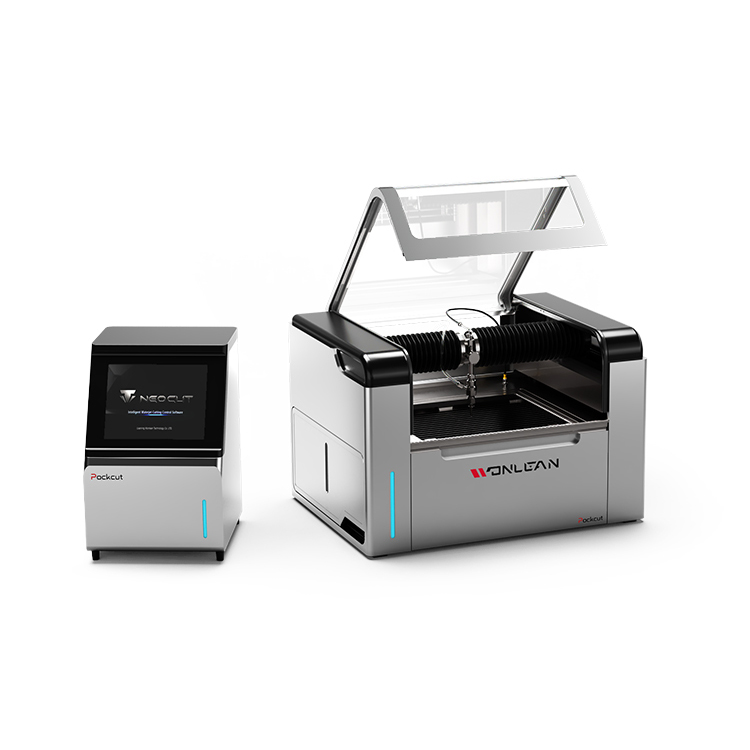
Facility constraints dictate the size of the equipment you can deploy. Aerospace prototyping labs or boutique manufacturing facilities often evaluate the footprint-to-capability ratio. Floor space in high-tech manufacturing environments is at a premium. A compact waterjet cutting machine for composite cutting provides high precision without dominating limited floor space. These smaller systems often integrate the pump and the cutting table into a single frame, simplifying installation and reducing the required footprint.
Conversely, large-format tables require massive infrastructure. They need extensive floor space for material handling, overhead cranes for loading large composite panels, and significant water volume management. The infrastructure required for large-format tables drastically increases deployment expenses, as you must account for the logistics of moving raw materials in and finished parts out of the cutting envelope.
Scaling up to an industrial composite waterjet cutting system involves premium features designed for continuous production. High-volume composite cutting generates hazardous dust and significant noise. Submerged cutting capabilities mitigate these issues by keeping the material under a shallow layer of water. The water traps the carbon fiber or fiberglass particulates, preventing them from becoming airborne and entering the operators' lungs or settling on sensitive facility electronics.
Submerged cutting requires specialized water level controls. The operator must be able to rapidly raise and lower the water level in the tank using pneumatic displacement bladders. The tank must feature stainless steel construction to resist the corrosive nature of stagnant water mixed with composite resins. Furthermore, you need advanced filtration systems to handle the composite sludge. Unlike metal cutting, where the swarf sinks, composite dust often floats or remains suspended in the water, requiring specialized weir tanks and centrifugal separators to keep the catch tank clean.
You must objectively compare alternative cutting methods to validate your financial decision. Each technology presents distinct advantages and trade-offs regarding initial investment, operating expenses, and material versatility. Understanding the physical limitations of each process ensures you select the right tool for your specific manufacturing requirements.
High-wattage fiber lasers require a massive capital outlay, often significantly exceeding the initial investment of a comparable waterjet system. Lasers demand complex optics, specialized safety enclosures to protect operators from stray radiation, and expensive laser power sources. Standard CNC mills generally present a lower initial investment but lack the ability to process large sheet goods efficiently without specialized vacuum fixturing and massive gantry structures.
Waterjets carry high hourly operating expenses due to the constant consumption of abrasive garnet and water. They also require frequent replacement of high-pressure wear parts. In contrast, fiber lasers have lower hourly operating expenses but require expensive assist gases like nitrogen or oxygen to clear the molten metal from the kerf. When a laser cutting head crashes or a power source fails, the replacement parts are exceptionally expensive, offsetting some of the hourly savings. CNC mills consume cutting tools rapidly when machining hard materials like titanium or Inconel, driving up the tooling budget.
Plasma cutters offer a significantly lower capital expenditure and operating expense profile. They cut thick steel rapidly by blowing a channel of ionized gas through the material. However, plasma cutting introduces a massive Heat Affected Zone (HAZ), altering the metallurgy of the cut edge. The extreme heat hardens the edge of the steel, making it incredibly difficult to drill, tap, or machine afterward. This requires expensive and time-consuming secondary machining to remove the hardened edge before welding or final assembly.
Waterjets justify their higher hourly expenses through unmatched versatility. They utilize a cold cutting process. They cut anything from tool steel to titanium, stone, glass, and heat-sensitive composites without generating a HAZ. The material properties remain completely unchanged. Eliminating secondary machining operations often makes the waterjet the most profitable option for complex or thick materials, as the part comes off the table ready for final assembly.
Cutting Technology | Initial Investment (CapEx) | Hourly Operating Expense | Material Versatility | Heat Affected Zone (HAZ) |
|---|---|---|---|---|
Waterjet | Moderate to High | High (Abrasive/Water) | Excellent (Metals, Stone, Composites) | None (Cold Cutting Process) |
Fiber Laser | Very High | Low to Moderate (Assist Gas) | Good (Primarily Metals) | Minimal to Moderate |
Plasma | Low | Low | Limited (Conductive Metals Only) | Severe |
CNC Mill | Moderate | Moderate (Tooling Wear) | Good (Requires Rigid Fixturing) | None (Friction Heat Managed by Coolant) |
Overlooked expenses frequently cause budget overruns during deployment. You must account for site preparation, infrastructure upgrades, and environmental compliance before the machine arrives at your facility. Failing to prepare the installation site leads to delayed commissioning and idle equipment.
A water-filled cutting tank is incredibly heavy. A standard industrial tank filled with water, steel grating, and heavy plate material weighs tens of thousands of pounds. Standard industrial concrete floors often lack the structural integrity to support this concentrated weight without cracking or settling. If the floor settles unevenly, the machine geometry twists, destroying your cutting tolerances. You may need to excavate the existing floor and pour reinforced concrete pads specifically designed for the machine's footprint, utilizing heavy rebar grids and high-PSI concrete.
Electrical infrastructure often requires significant upgrades. High-horsepower pumps require dedicated high-amperage, three-phase power drops. Installing new electrical panels, running heavy-gauge conduit across the facility, and upgrading facility transformers add substantial hidden expenses to the installation phase. You must consult with a licensed industrial electrician to verify your facility's current capacity against the pump's peak amperage draw.
Incoming water quality directly impacts pump seal life. Hard water containing high levels of dissolved solids (TDS), calcium, and magnesium destroys high-pressure components rapidly. The minerals act as microscopic abrasives inside the high-pressure cylinders, scoring the plungers and shredding the seals. You may need to install commercial water softening systems or Reverse Osmosis (RO) units to condition the cutting water before it enters the pump.
Environmental regulations govern the disposal of spent abrasive sludge. You cannot simply dump garnet mixed with heavy metal particulates down the drain. Implementing closed-loop water recycling systems reduces water consumption but requires a large upfront investment in settling weirs and filtration towers. You must also budget for regular professional vacuum truck services to remove and legally dispose of the abrasive sludge from the catch tank. Alternatively, you can invest in automated abrasive removal systems that continuously dredge the tank and deposit the spent garnet into a hopper, reducing manual labor but increasing the initial equipment purchase.
The physical machine requires sophisticated software to operate efficiently. You must factor in the licensing expenses for advanced CAD/CAM software. Nesting software is critical for maximizing material yield and reducing scrap. Premium nesting algorithms automatically arrange parts on the sheet to minimize waste, but these software packages require expensive annual subscriptions and maintenance contracts.
Specialized operator training is non-negotiable. An untrained operator can cause catastrophic pump failures by ignoring maintenance warnings, improperly assembling high-pressure fittings, or failing to torque the cutting head components correctly. High-pressure water is dangerous and unforgiving. Investing in comprehensive manufacturer training prevents costly downtime, extends the life of consumable parts, and ensures safe operation on the shop floor.
Procurement teams need a step-by-step methodology to justify this significant investment. A structured evaluation framework removes emotion from the purchasing decision and focuses entirely on long-term financial viability. You must look beyond the initial purchase order and evaluate the equipment's impact on your entire manufacturing workflow.
You must project the total financial commitment over a standard five-year depreciation cycle. The formula requires adding the initial capital expenditure and all installation expenses, including concrete work and electrical drops. Next, calculate the projected annual operating expenses based on your expected shift hours, factoring in abrasive consumption, utility rates, and consumable wear parts. Multiply that annual operating expense by five. Add the projected five-year maintenance budget, including major pump rebuilds and chiller servicing. Finally, subtract the estimated salvage value of the equipment at the end of the term. This comprehensive calculation reveals the true financial commitment required to operate the system over its useful life.
Calculate the payback period by comparing the proposed internal cost-per-part against your current outsourcing expenses. Factor in the time saved by eliminating secondary machining operations. If the machine replaces slower legacy methods, quantify the value of increased production throughput. Calculate the reduction in scrap material achieved through advanced nesting software and the narrow kerf of the waterjet stream. A realistic payback period calculation helps justify the initial capital outlay to stakeholders by demonstrating exactly when the machine will become a net-positive asset for the facility.
The initial price of a cutting system represents a significant capital outlay, but the true financial impact lies in abrasive management, pump maintenance, and utility consumption. Understanding these variables allows you to forecast operating budgets accurately and avoid unexpected downtime. Match your pump technology and table size strictly to your production volume and material types. Prioritize specialized piercing controls over raw horsepower if your primary focus is composite manufacturing. Over-specifying a machine inflates your initial investment without providing tangible returns, while under-specifying leads to premature component failure. To finalize your procurement strategy, execute the following steps:
Audit your facility's concrete slab thickness and electrical capacity to identify necessary infrastructure upgrades before requesting equipment quotes.
Send specific material samples to the manufacturer for test cuts to verify edge quality, actual cutting speeds, and abrasive consumption rates.
Calculate your exact local utility rates for water and electricity to build an accurate hourly operating expense model.
Contact local waste management authorities to determine the environmental regulations and disposal procedures for spent abrasive sludge in your municipality.
A: The initial capital outlay varies widely based on capability. Entry-level models designed for light prototyping require a moderate investment. In contrast, a production-grade waterjet cutting machine with multi-axis cutting heads, heavy-duty gantries, and ultra-high-pressure pumps represents a significant capital expenditure suitable for continuous manufacturing environments.
A: Hourly operating expenses fluctuate based on pump pressure and nozzle size. The primary drivers are abrasive garnet consumption, electricity for the high-horsepower pump, water utility rates, and the routine replacement of high-pressure wear parts like mixing tubes and orifices.
A: Ultra-high-pressure water aggressively erodes internal pump components, requiring frequent maintenance. The cutting process constantly consumes abrasive garnet. Additionally, the harsh, wet environment dictates that every sensor, motor, and mechanical guide must be heavily sealed and water-resistant, driving up manufacturing costs.
A: Yes. While the base frame remains similar, composite cutting requires specialized add-ons to prevent material delamination. You must invest in low-pressure piercing controls, vacuum assist technologies, and specialized software to safely pierce carbon fiber and fiberglass without destroying the workpiece.
A: Monthly abrasive expenses depend entirely on your production hours and cutting pressure. You calculate this by multiplying your pump's pounds-per-minute consumption rate by your active cutting hours, then factoring in your bulk garnet purchasing rate. It remains the highest ongoing operational expense.
A: Water usage includes both the cutting stream and pump cooling. Annual expenses vary drastically based on local municipal utility rates and operating shifts. Facilities can mitigate high cooling water expenses by investing upfront in closed-loop chiller systems to recycle the cooling water.
A: Hidden deployment expenses often include excavating and pouring reinforced concrete floors to support the tank's weight. You must also budget for three-phase electrical upgrades, water softening or RO systems for pump longevity, and infrastructure for removing and disposing of abrasive sludge.